Damage Assessment Toolkit
When Disaster Hits, Crisis Track Makes Recovery Simple, Fast, and FEMA-Ready
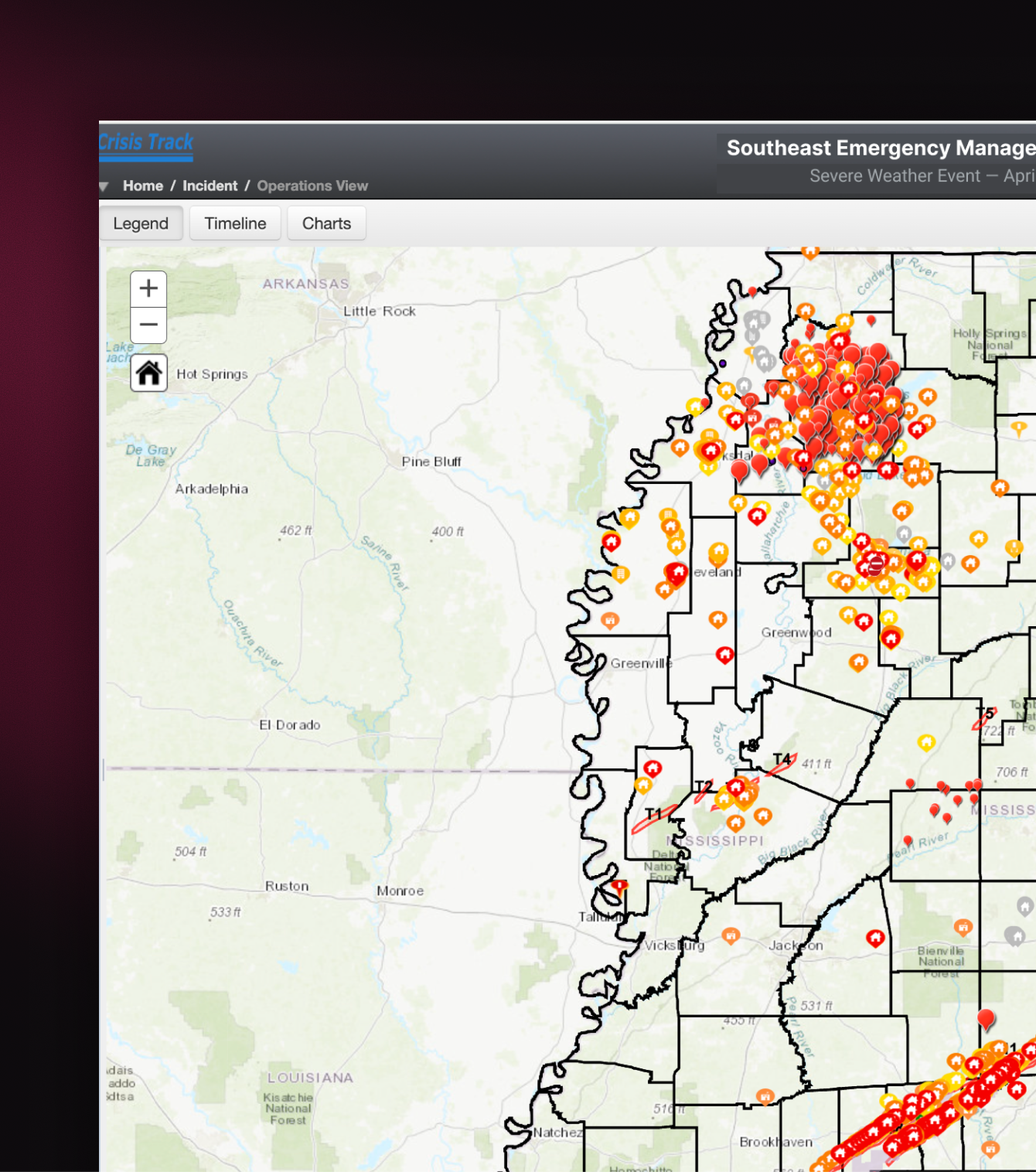
Gather and track damage assessments, infrastructure data, and citizen input in one FEMA-ready workflow — so your team can act faster, document correctly, and expedite reimbursements.
Challenges
Disconnected Damage Assessment Tools Cost Time, Money, and Trust
Replaces these issues with one platform that captures, syncs, and submits — in real time.
Manual FEMA Forms
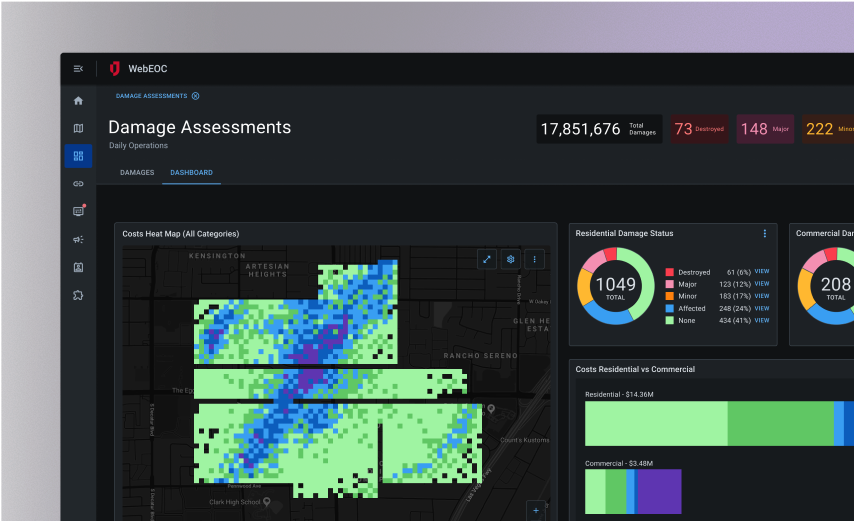
GIS But No Damage Visibility
Delayed Public Input
Scrambling After the Storm
Teams rebuild data weeks later for audits and funding.
Built for local and state EMAs
One Damage Assessment Software Platform. Three Levels of Operational Control.
Preparedness
& Damage Assessment
Before and after disaster strikes,
you need visibility and readiness
- Prefills property info using GIS and tax recordsCut field time in half and reduce duplicate entries
- View full infrastructure inventories in advance for mission planningPlan resource staging and missions proactively
- Use SOPs and exercises to train teams pre-incidentBuild muscle memory before the next event
- Capture data offline via mobile app — GPS, photos, standard categoriesNo internet? No problem. Data syncs when you're back online.
Get ahead of assessments and activate teams without delay.
Documentation & Cost Recovery
As data flows in, Crisis Track builds the documentation for you:
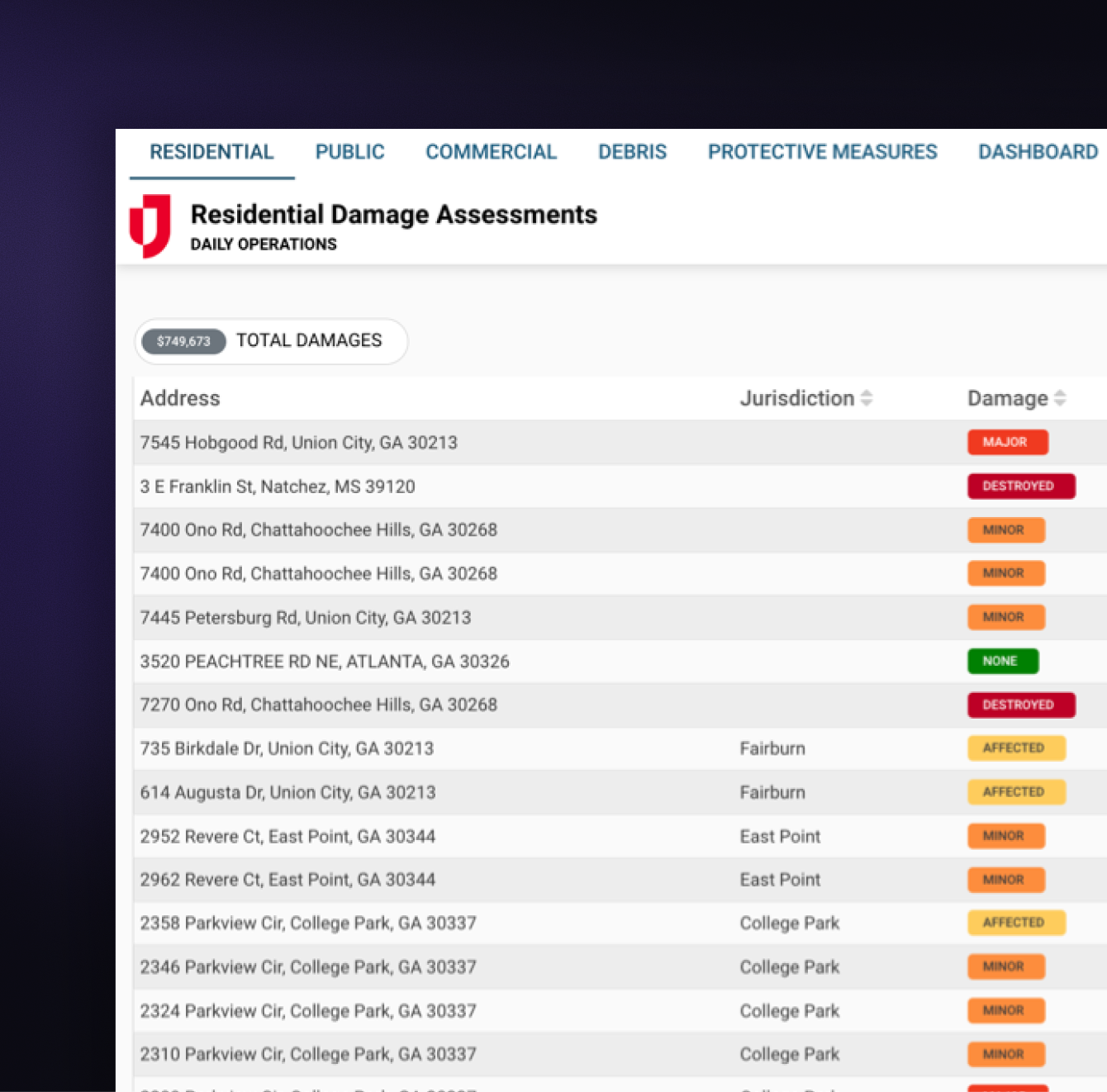
- Auto-fills FEMA & FHWA forms with every logged inputNo more copy-paste. Go from field to form in minutes
- Tracks labor hours, equipment use, and debris categoriesBuild your case for every dollar spent
- Auto-calculates repair and cleanup cost estimatesEstimates aligned to FEMA thresholds
- Aligns with FEMA cost accounting and grant thresholdsAudit-ready from day one.
Get reimbursed faster and prove eligibility with less back-and-forth.
Emergency Ops Coordination
When incidents escalate, your
EOC needs a complete picture:
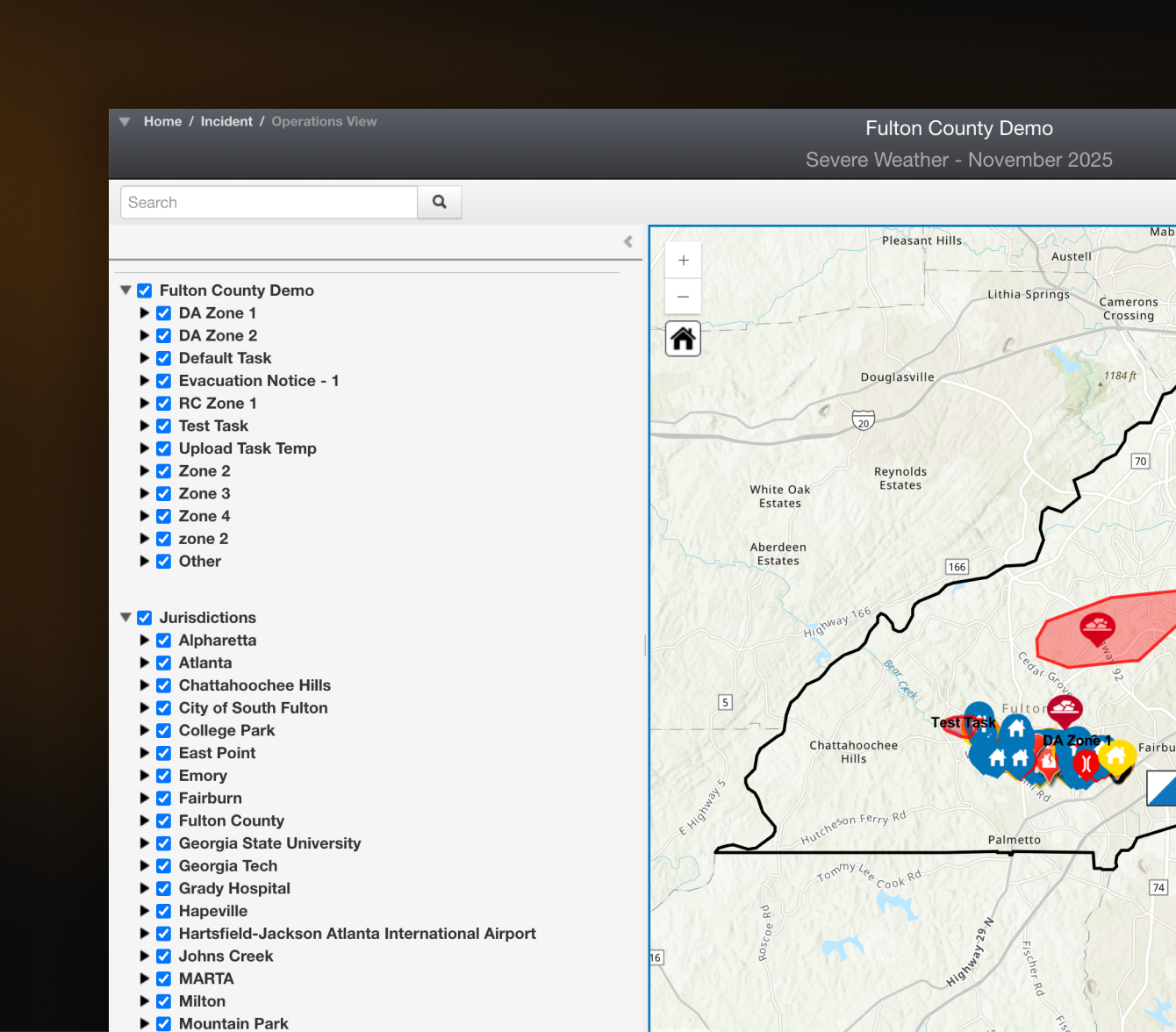
- Dashboards for IAPs, situation reports, and live team trackingCentralized view for faster command decisions
- Built-in workflows for hazmat, evacuation, and reentry permitsNo more spreadsheets or side conversations
- Enables coordinated search activities with full documentationReal-time visibility into search teams, logs, and outcomes
Stay on top of every moving part — from the field to leadership.
Survivor Portal
Add-on
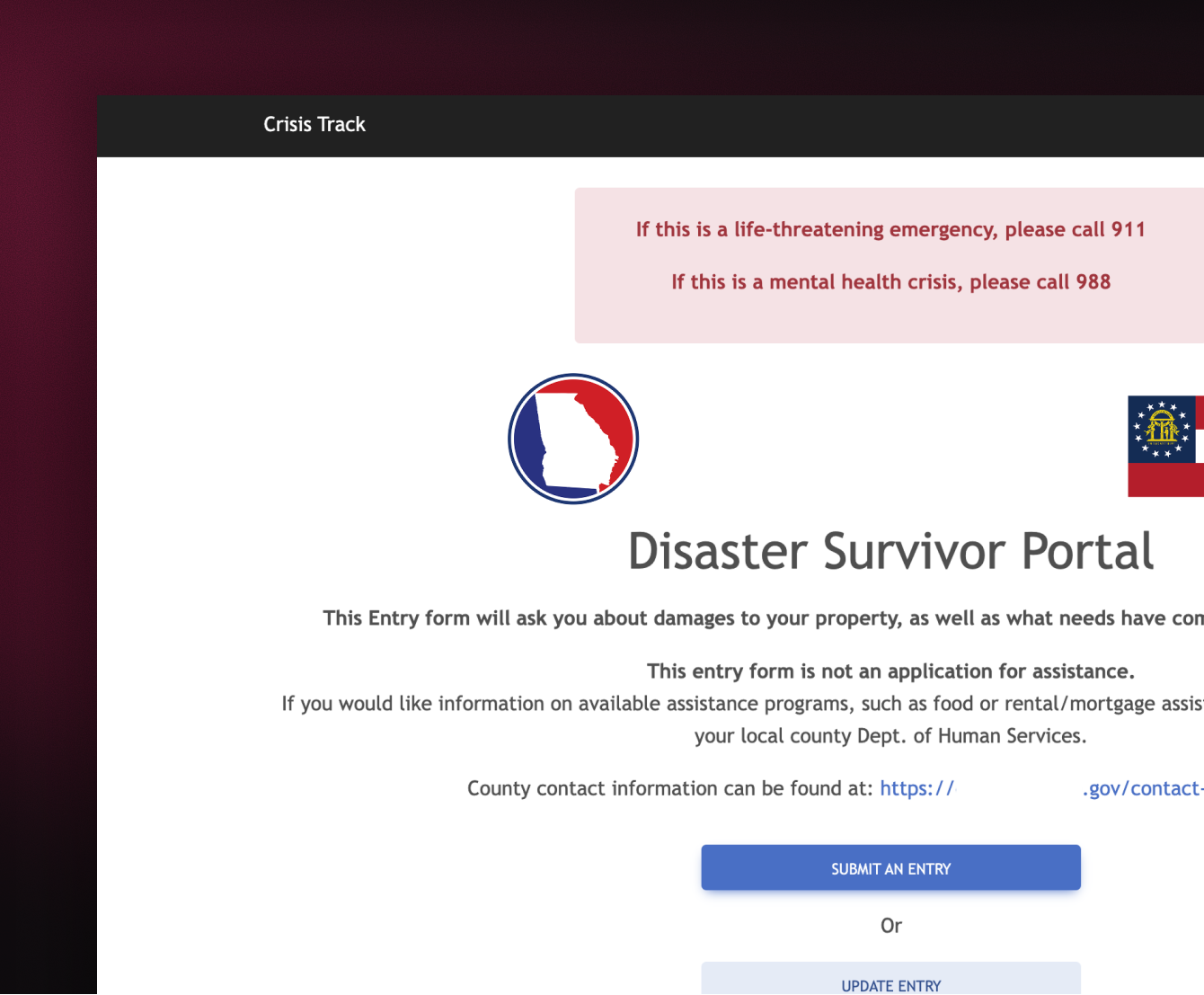
Most systems overlook unmet needs like medical access, water, and food — yet these are the first things communities care about. The Crisis Track Survivor Portal bridges that gap.
- Citizens report damage and unmet needs (housing, food, medicine)
- Submissions update and tie directly to incident views
- Supports inclusive recovery with visible, actionable community data
Build trust with the public and prioritize help where it’s needed most.
A configurable, compatible, ready to deploy damage assessment toolkit.
Whether you manage a single county or coordinate a multi-jurisdiction event, Crisis Track adapts to your teams, systems, and scale.
DesignStudio
WebEOC + ArcGIS Native
3rd-party Integrations
Role-Based Access
Deploy in under 2 weeks.Train your team in one session.
Built With, and for, the People Who do this Work Every Day
Crisis Track is the only damage assessment solution designed for how emergency management teams actually operate, from day-to-day readiness to disaster recovery.
Faster Field-to-FEMA Workflow
Higher Cost Recovery
Lower Operational Friction
Works with your existing systems and doesn’t require IT intervention.
Compliance-Centric
FEMA/NIMS-aligned, with exportable SITREPs, audit logs, and support for grant-funded reporting.
Extend Your Impact with the Juvare Ecosystem
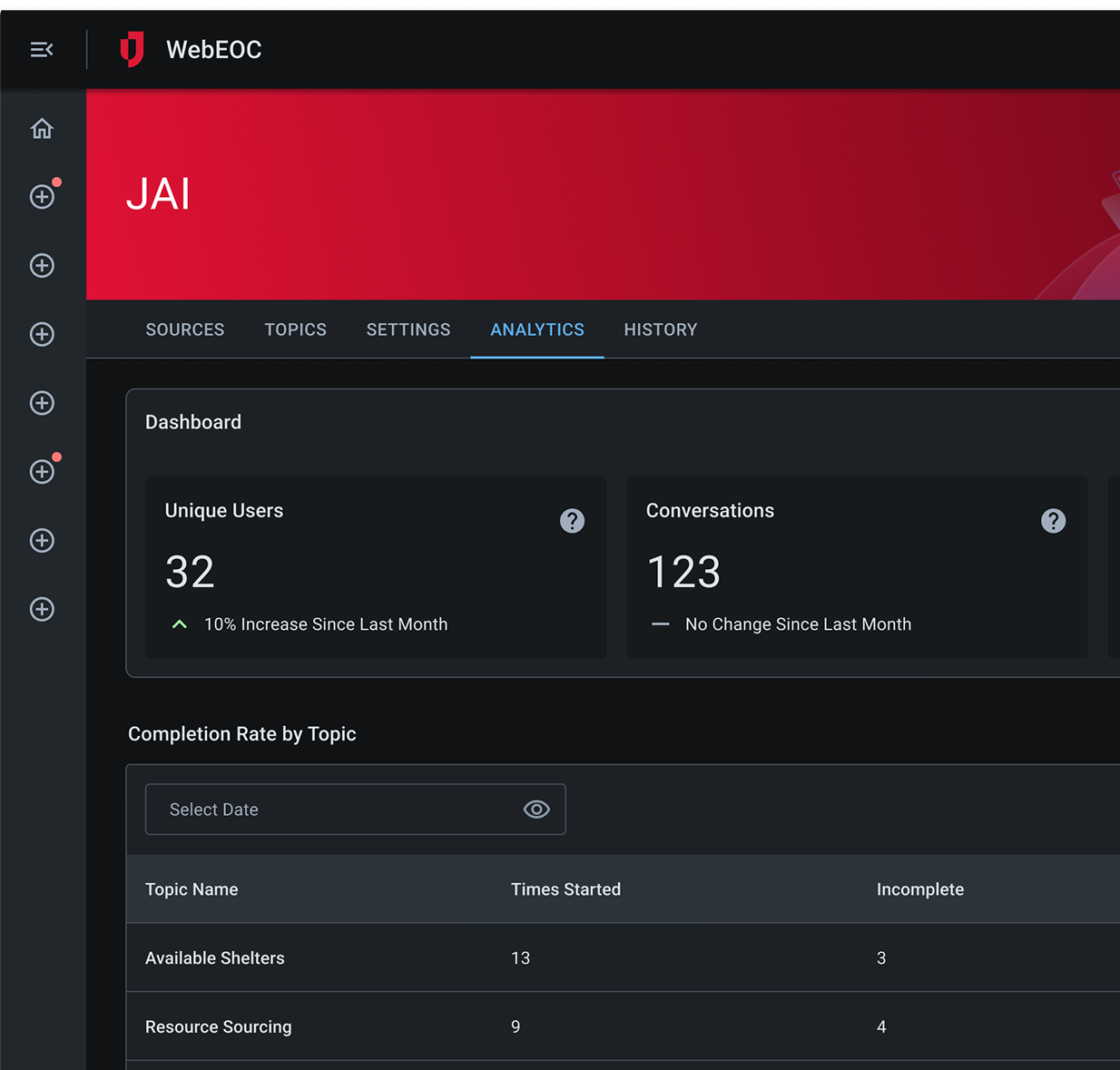
Juvare AI Assistant (JAI)
Your virtual teammate, right inside WebEOC.
- Ask plain-language questions “What’s our total debris cost this week?” “Which counties haven’t submitted IAPs?”
- Get instant answers and summariespulled from across your boards
- Embedded directly in WebEOC— no switching tools or extra training
- Secure by design— JAI respects your WebEOC permissions and never stores or trains on your data
Whether you’re prepping reports or running daily ops, JAI keeps your data accessible, actionable, and audit-ready.
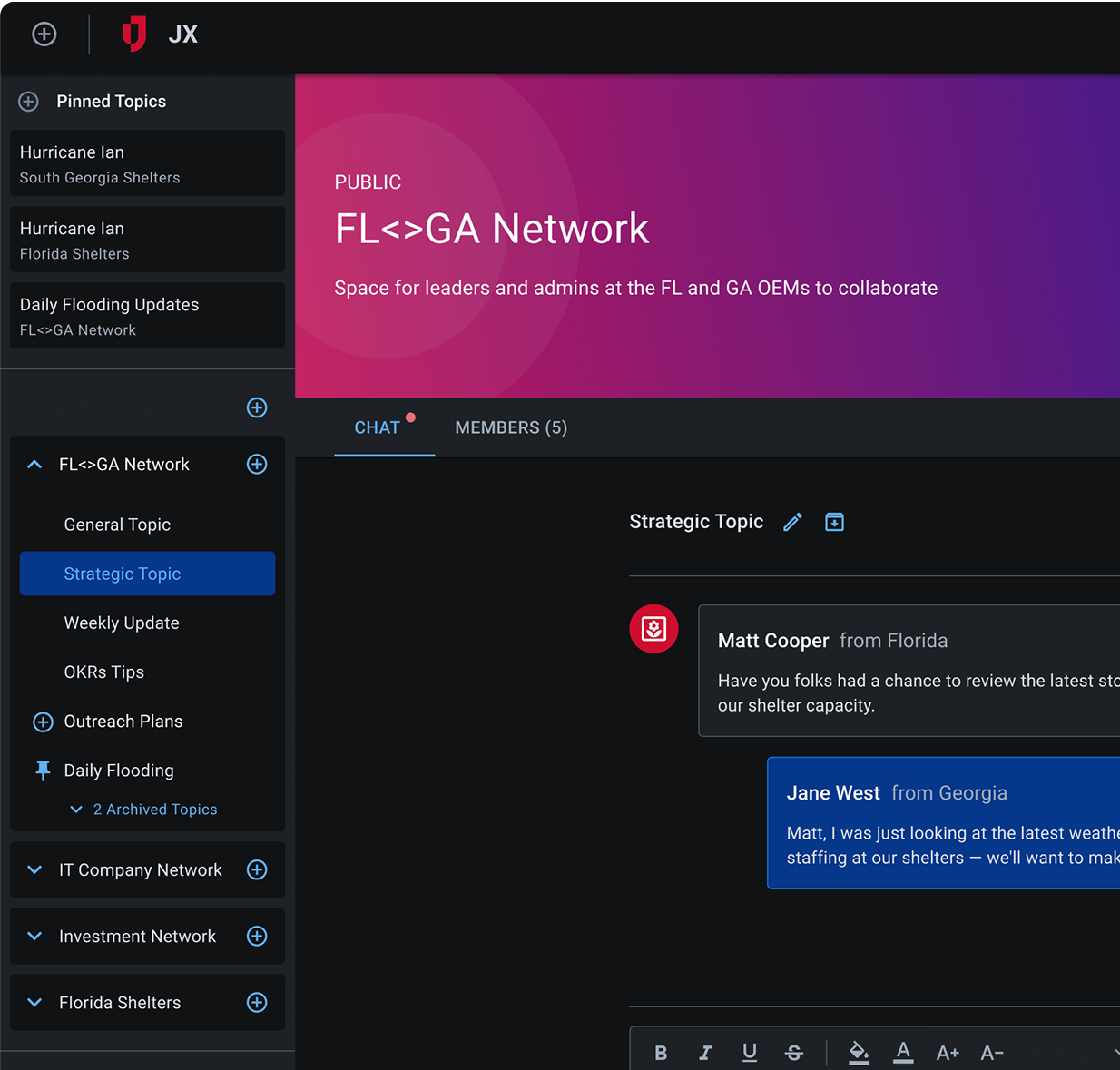
Juvare Exchange
Real-time collaboration across jurisdictions, partners, and systems.
- Share WebEOC boards, files, and status updatesacross counties, agencies, or organizations
- Collaborate securelywith opt-in access and full control over who sees what
- Bring in third-party datalike weather, traffic, or hospital capacity
- Keep everyone aligned— local to state, healthcare to public safety
Whether you’re coordinating a hurricane response or managing regional shelter operations, Juvare Exchange keeps all players on the same page.
Damage Assessment Tools, Trusted by Recovery Teams Across the Country
Proven in the field. Validated in audits. Deployed in 100+ jurisdictions.
Frequently
Asked Questions
What does Crisis Track do?
Crisis Track streamlines disaster damage assessment, providing tools for field data collection and FEMA reporting. Organizations can use Crisis Track to help facilitate critical reimbursements from both federal and state organizations.
How does it support field teams?
Field users can collect data via mobile devices—online or offline—with automated GPS tagging and photo capture. In addition, Crisis Track offers public-facing forms that can include the community in this process, with citizens able to directly submit their own damage assessments.
Can Crisis Track integrate with WebEOC?
Yes. It integrates directly with WebEOC for unified situational awareness and reporting.
Who typically uses Crisis Track?
Local governments, emergency management offices, and recovery teams use it for post-disaster assessments. Through public-facing forms, citizens themselves can even participate in the damage assessment and disaster recovery process.
Thought Leadership
Read More About Juvare, Critical Operations Software, and the Work We Do
From pandemic response to election coordination to large facilities management