

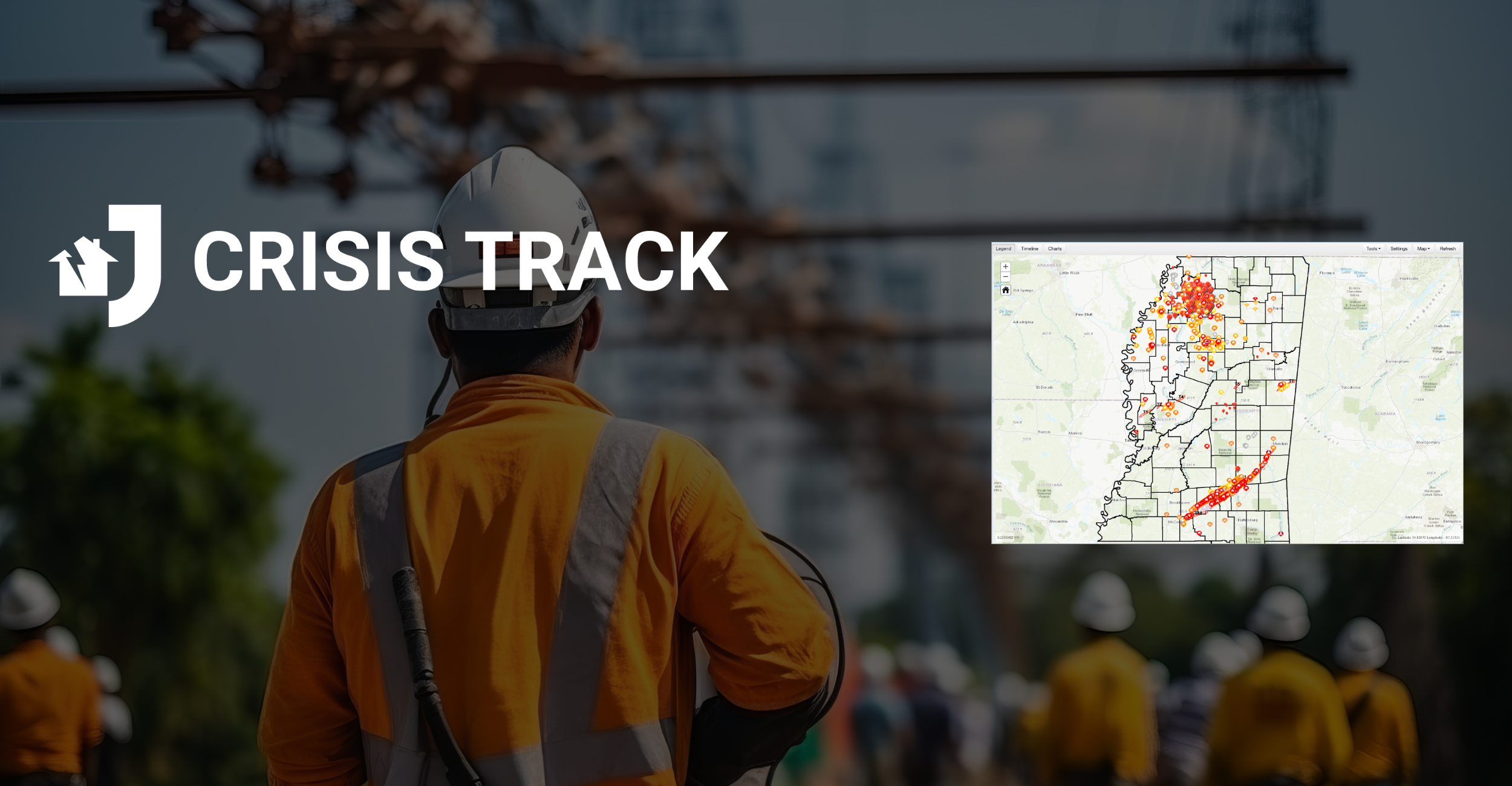
Storm recovery doesn’t end when the lights come back on. The damage assessment data your field crews collect in the hours and days after an event determines how quickly you can close out an incident, satisfy regulators, and recover costs from FEMA and state agencies.
The utilities that recover fastest and most completely are the ones that have connected their field data collection, EOC coordination, and reimbursement reporting into a single defensible workflow. This session is about what it takes to turn field damage data into coordinated storm recovery.
Join us:
- August 18, 2026
- 12:00pm Eastern Time (US & Canada)
- Live on Zoom
Presenters:
- Michelle Fraley – Chief, Corporate Services Officer, LUMA
- Mariel Cruz Sanchez – Director, Engineering Asset Management, LUMA
- Heriberto Gonzales Mendez – Director, Distribution Engineering, LUMA
- Ron Juarez – Account Executive, Juvare
What you’ll get:
- A framework for evaluating whether your current damage assessment process is audit-ready and FEMA-aligned
- A practical look at what connected field documentation, EOC validation, and reimbursement reporting looks like as a single workflow
- A customer perspective on the operational and financial risks of incomplete field data during major storm events
- A utility-centered demonstration of Crisis Track in action
Session structure :
- Why general-purpose tools fall short during major storm events
- The three points where utility damage assessment most commonly breaks down: field data collection, EOC validation, and FEMA submission
- Customer interview: lessons from a public utility’s post-storm recovery journey
- What a connected field-to-submission workflow looks like in practice, from initial damage capture through reimbursement documentation
- Live Crisis Track platform walkthrough
Who it’s for: Emergency managers, operations leaders, and recovery coordinators at public power utilities and municipal electric authorities responsible for storm response, damage documentation, regulatory reporting, or FEMA reimbursement, particularly those managing distributed infrastructure across wide service territories.