Healthcare and Hospital Emergency Management Software
In Healthcare and Public Health, The Real Crisis is Coordination
Better preparation. Faster action. More clarity. That’s exactly what Juvare delivers, with a suite of capabilities designed specifically for healthcare and public health.

3500+
Hospitals
30+
Public Health Agencies
20+ Non-Profit U.S.
Health Systems
A Lack of Coordination is its own Emergency When it Comes to Healthcare and Public Health.
Disconnected systems
Manual updates
Delayed alerts
The true emergency is lack of visibility and alignment.
Juvare changes that — with one connected platformHealthcare and Hospital Emergency Management Software: Built by Providers, for Providers
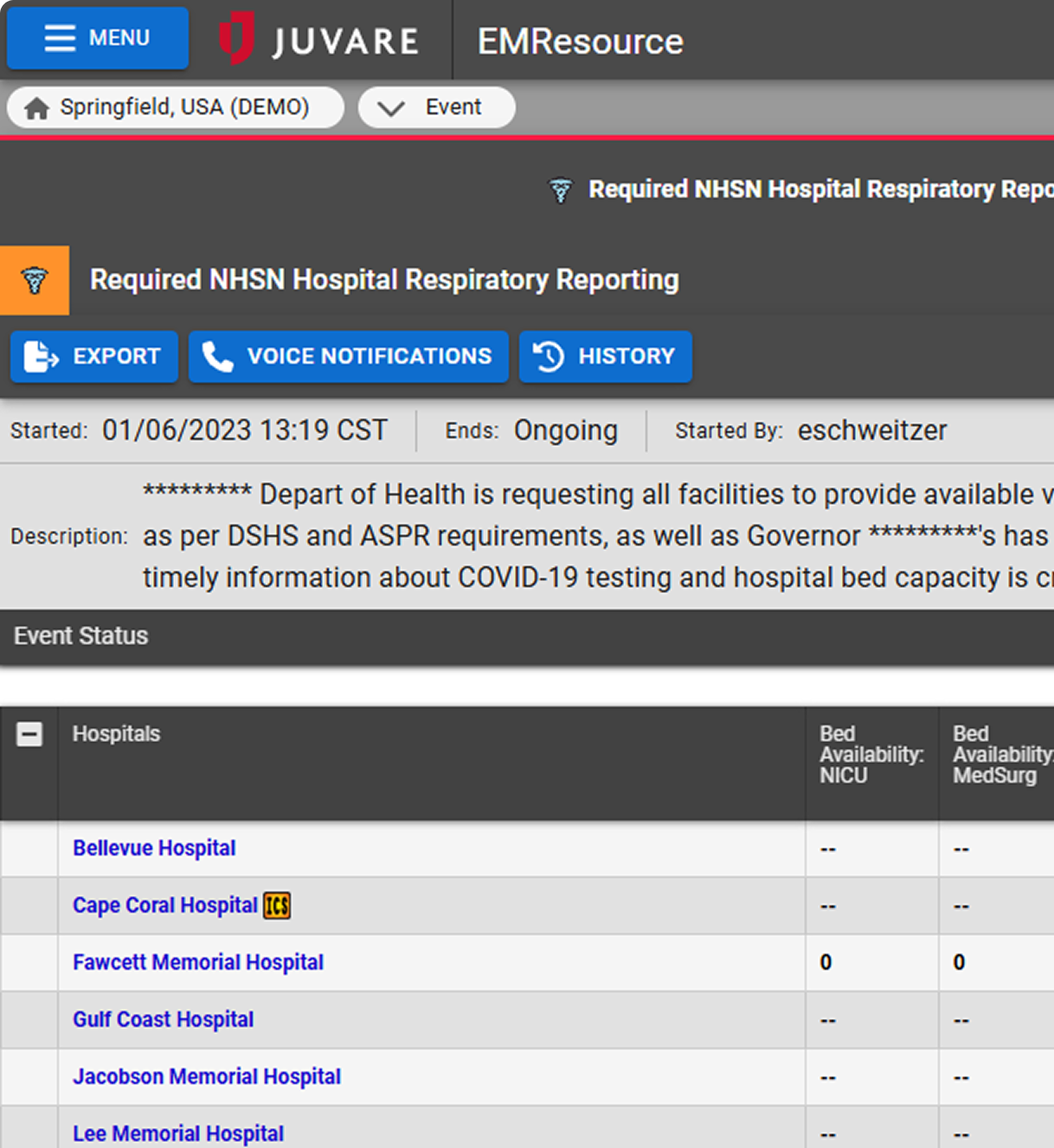
EMResource
Real-Time Decisions Start with Real-Time Data.
Live status dashboards to coordinate care faster, across facilities and systems.
- Filter views by facility type, region, or specialty
- Give your EMS team a real-time view of hospital capacity
- Track ED load, bed counts, diversion status
- Automate bed capacity and HRD reporting Click to learn more ->
“Everyone sees the same data. No second wasted. No patient misrouted.”
EMTrack
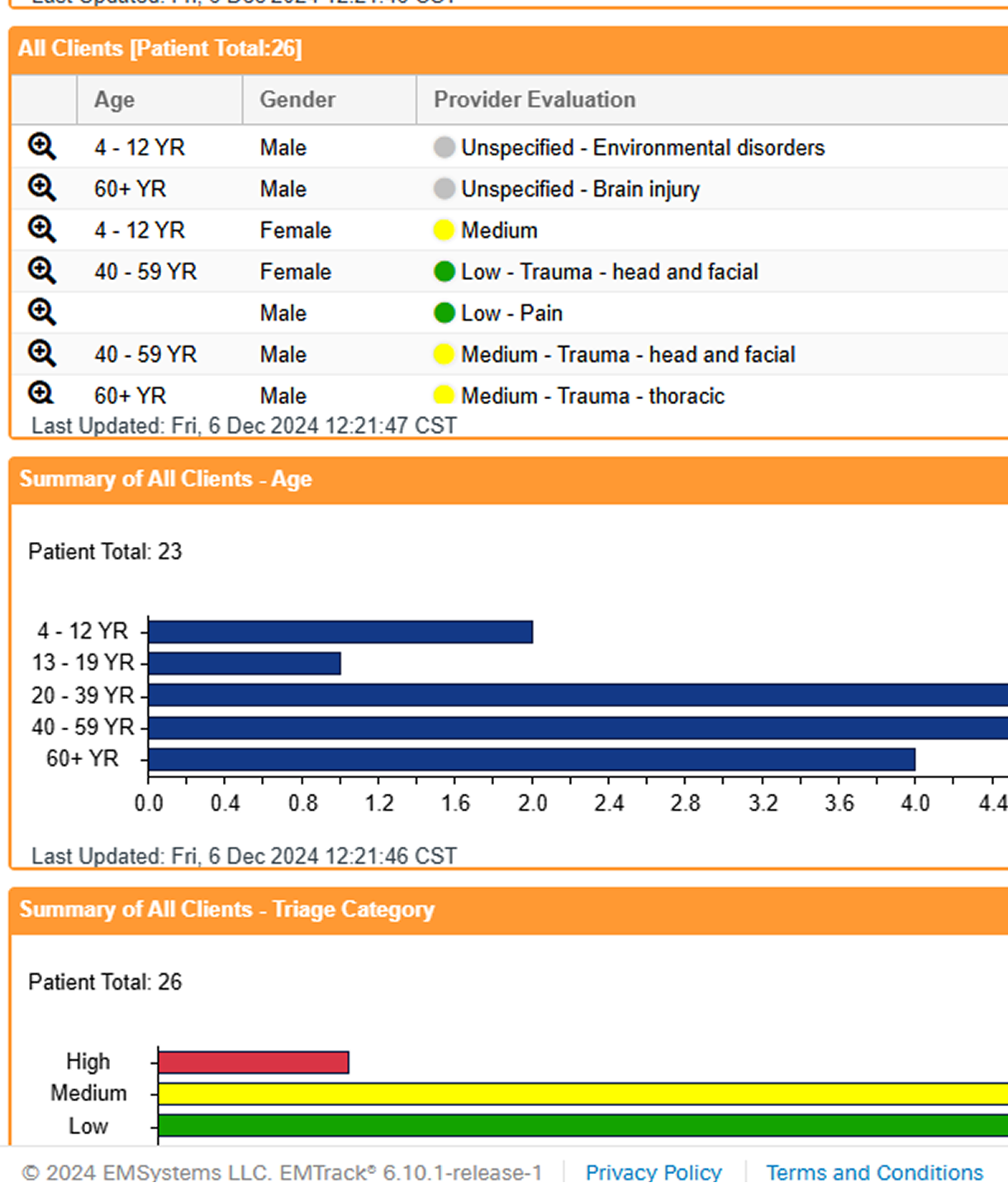
Have Every Patient, Every Movement, Tracked.
Mobile tools to track patients through events, transfers, and evacuations.
- Capture triage tags, barcodes, and IDs from mobile devices
- Manage mass vaccination clinics and outbreak response
- Support family reunification across sites or shelters
- Stay compliant with CMS, TJC, NEMSIS and HHS standards
WHY IT MATTERS
“In large-scale chaos, you know where every patient is — and where they’re going next.”
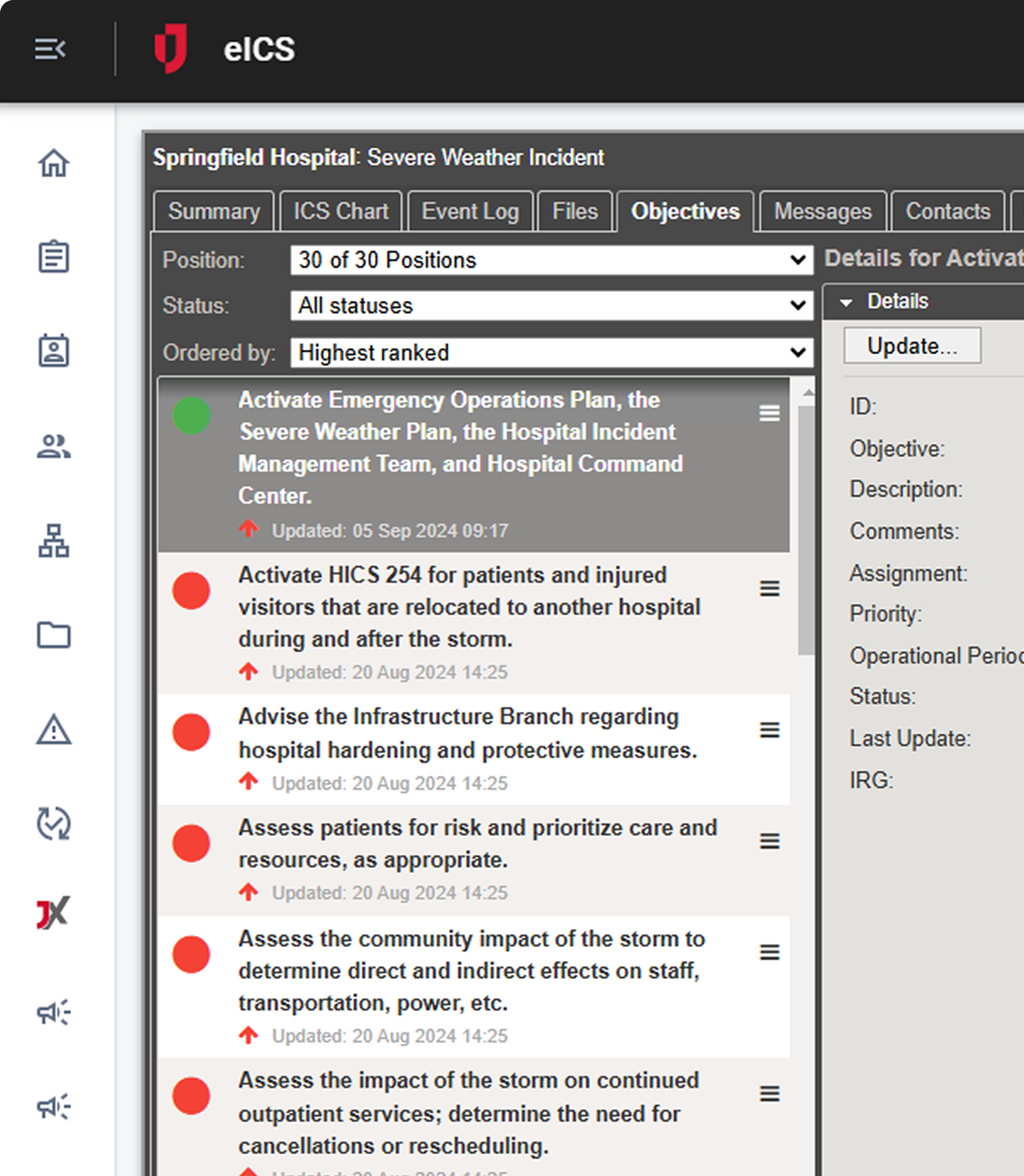
eICS
Launch a Smart Incident Command — Fast
- Prebuilt HICS templates and ICS roles
- Real-time status tracking and task logs
- Generate after action reports
- Integrated Hazard Vulnerability Analysis (HVA)
WHY IT MATTERS
“You know who’s doing what — and you can prove it afterward.”
CORES HAN
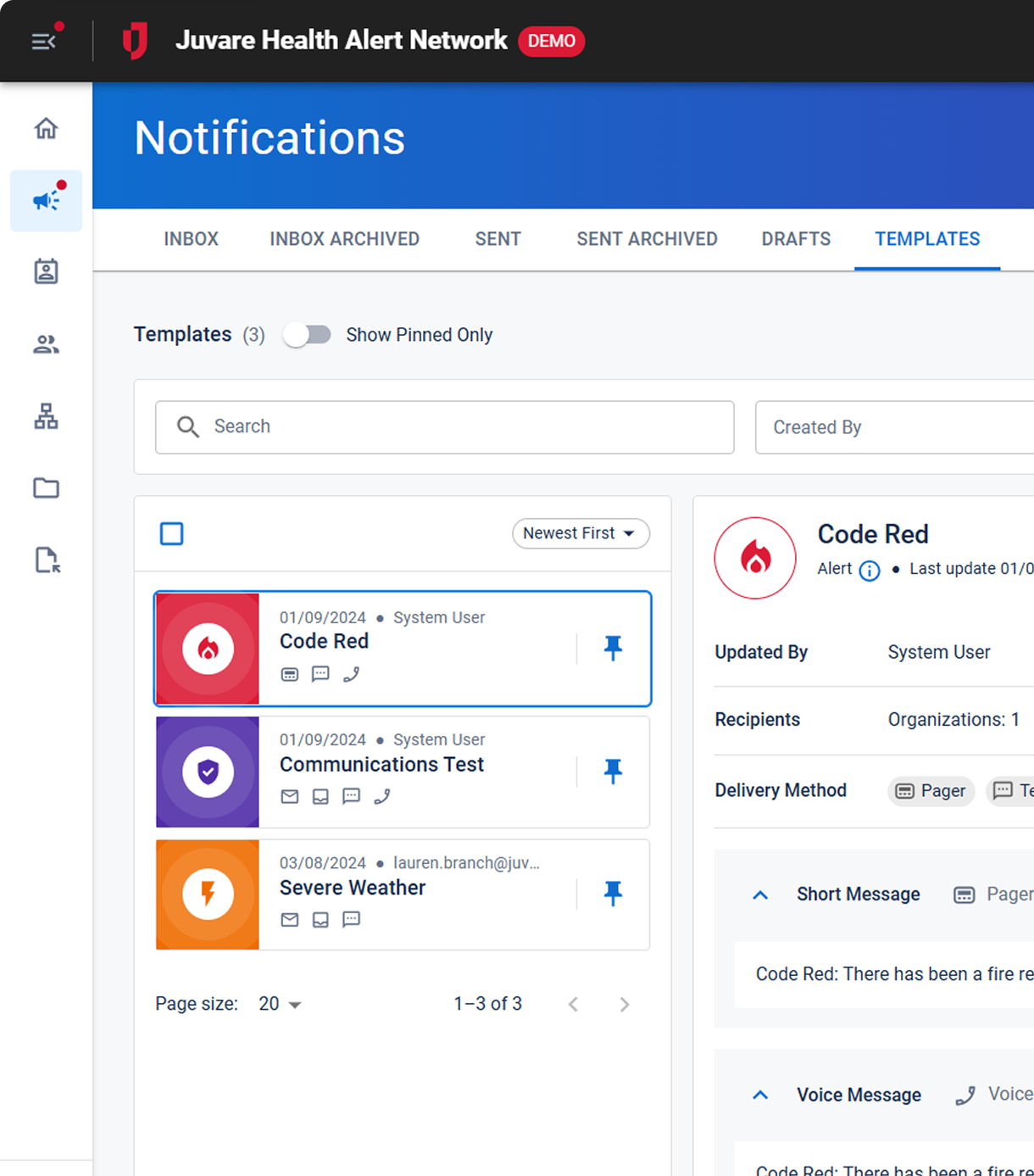
Coordination Only Works When the Right People get the Right Update — Instantly.
WHY IT MATTERS
- Multi-channel alerts (voice, text, email, inbox)
- Target by role, region, org
- Track delivery and response history
“Never send a blast when what you need is precision.”
CORES RMS
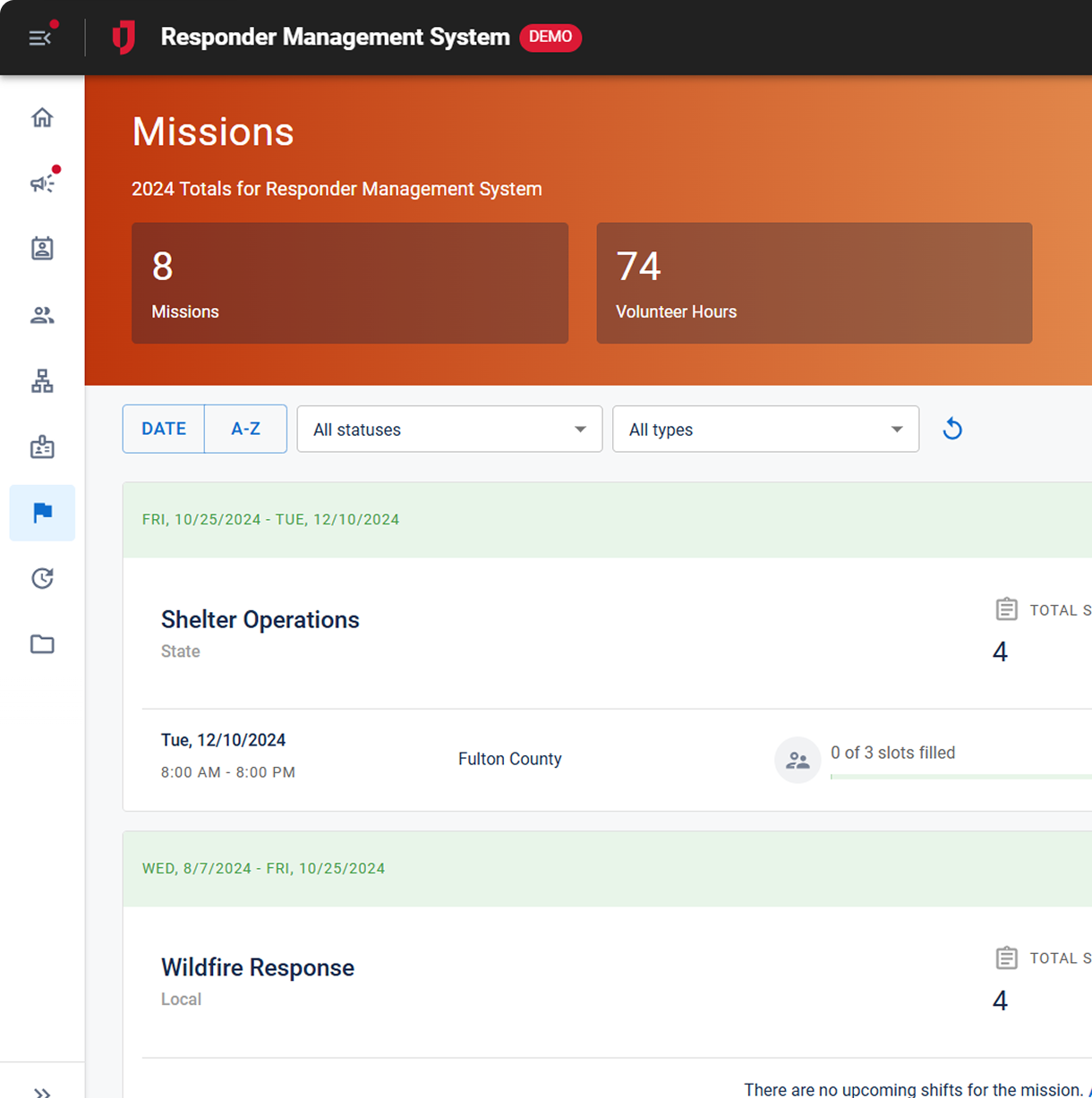
Activate Qualified Volunteers Fast, with Built-in Credentialing, Tracking, and Deployment Workflows.
- Pre-event volunteer registration
- Credential + background verification
- Role assignment, badging, and mission tracking
WHY IT MATTERS
“In a crisis, you already know who can help — and how.”
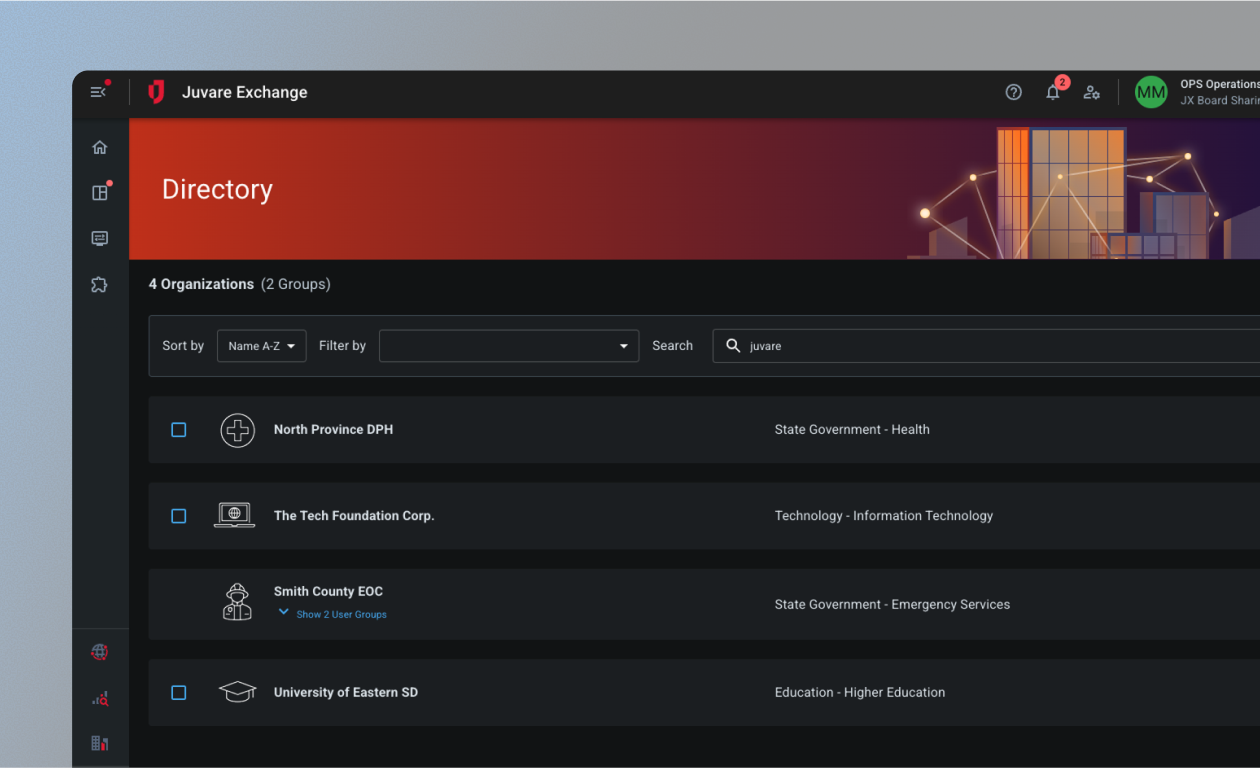
A Platform That Connects. A System That Adapts.
HealthSuite capabilities seamlessly integrate with the full suite of Juvare products:
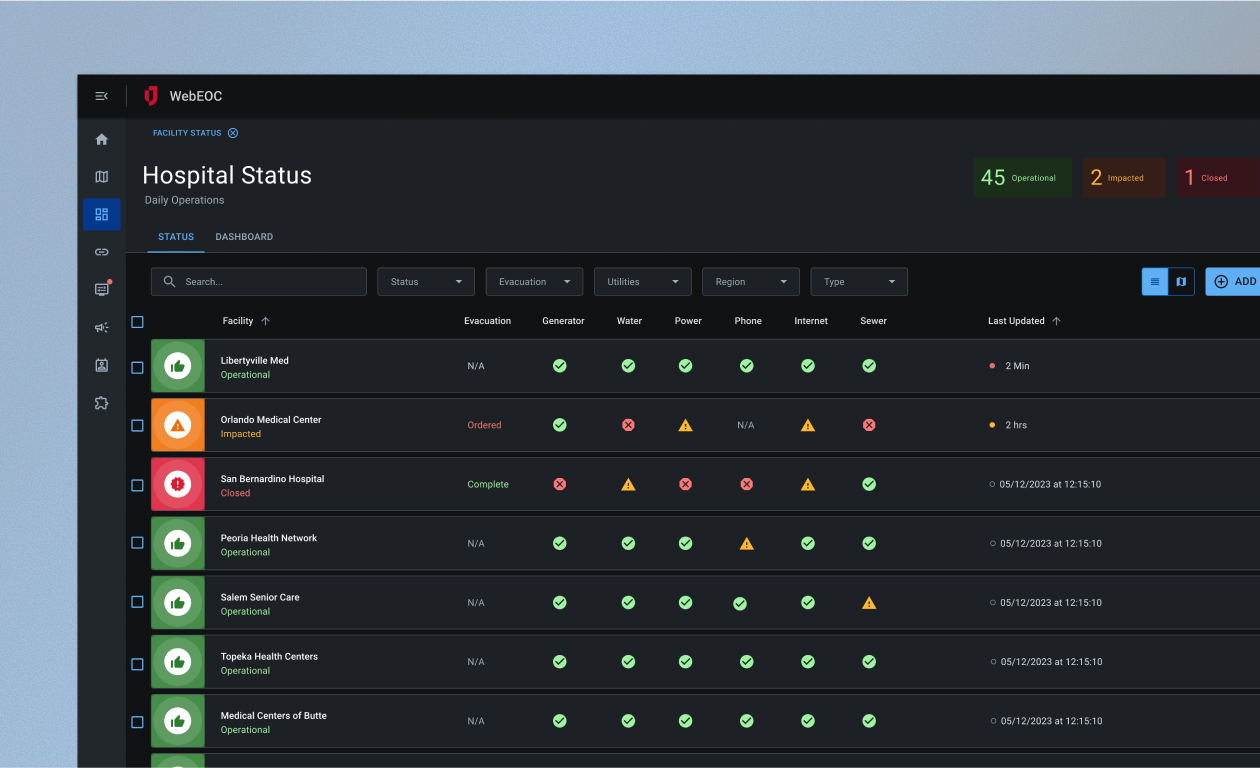
WebEOC for Healthcare
Healthcare Emergency Response Software that Works With Your Tech
No rip-and-replace. Seamless integrations with the tools
you trust, the way you work.

Electronic Medical Records & Electric Health Records

CAD, GIS, and Location Tools

Inventory & Supply Systems

APIs & Data Standards
HL7, FHIR, and RESTful APIs for secure, scalable interoperability.

Partner-Enabled Capabilities
Aerial incident views, cold chain visibility, and IoT-based asset tracking.
Trusted by Thousands of Healthcare Emergency Management Teams

Having that 50,000 foot view of the resources around the state allows us to know where we need the backfill, additional resources to support a specific event.
Jason Brown
Director, Healthcare Emergency Preparedness, PHMC

40,000+
facilities
3,500+
hospitals
30+
public health systems
Frequently
Asked Questions
What is Juvare HealthSuite?
What products make up the HealthSuite?
How can healthcare organizations measure 'readiness' before an incident occurs?
What are the most important tech features during a public health emergency?
Can HealthSuite integrate with electronic health records (EHRs)?
Is HealthSuite compliant with healthcare privacy regulations?
How can healthcare organizations ensure they’re in line with the CDC NHSN bed capacity reporting requirements?
What does a mass notification and alerting system do?
What are the benefits of a mass notification and alerting system?
Are there mass notification and alerting systems specifically designed for public health and healthcare organizations?
What features should we look for in a mass notification and alerting system?
What does a responder management solution (RMS) do?
What are the benefits of an RMS?
What features should we look for in an RMS?
Who benefits from using an RMS?
What is the Incident Command System (ICS)?
What are the key benefits of an electronic ICS?
eICS streamlines every phase of incident management—before, during, and after an event. It brings teams together with real-time communication, role-based tasking, and automated documentation, improving response speed, accountability, and situational awareness.
Are there any out-of-the-box electronic ICS solutions?
Yes! Juvare’s eICS system is designed to work out of the box, letting you get started quickly and easily.
What features should we look for in an electronic ICS?
Who uses electronic ICS systems?
What is a resource management platform?
How does a resource management platform help healthcare organizations?
What are the key benefits of a resource management platform?
EMResource transforms how agencies and healthcare systems share information and make decisions during daily operations or crises. It enables faster coordination, smarter resource allocation, and improved patient outcomes by connecting every stakeholder on a single, live platform.
How is a resource management platform better than traditional reporting tools?
How do healthcare organizations use tracking platforms?
What are the key benefits of a tracking platform?
EMTrack simplifies complex tracking operations by uniting multiple agencies and data sources in one secure system. It enhances situational awareness, accelerates reunification, and ensures compliance with healthcare and emergency preparedness standards.
What features make a tracking platform stand out?
What are common use cases for healthcare organizations using tracking platforms?
EMTrack supports mass casualty incidents, hospital evacuations, family reunification efforts, vaccination tracking, and multi-agency emergency responses of any size.
Thought Leadership
Read More About Juvare, Critical Operations Software, and the Work We Do
From pandemic response to election coordination to large facilities management