In emergency situations, quick and decisive action can be the difference between recovery and disaster. Making the right decisions protects your people, mitigates damage, and enables total recovery. To empower your organization to make these critical decisions, you need complete insight into events as they develop.
Complete situational awareness should be a top priority for businesses, healthcare facilities, higher education institutions, and military and defense agencies alike. In this guide, we’ll cover:
- What Is Situational Awareness?
- Who Benefits From Situational Awareness?
- How Technology Can Boost Situational Awareness
Let’s dive in.
What Is Situational Awareness?
Situational awareness is the ability to monitor, understand, and predict critical events to make informed decisions. It requires you to remain vigilant, observing your surroundings to identify changes or threats quickly and respond appropriately. The term applies to personal safety, workplace safety, and high-stakes fields like emergency response. Situational awareness is built on a foundation of best practices, including: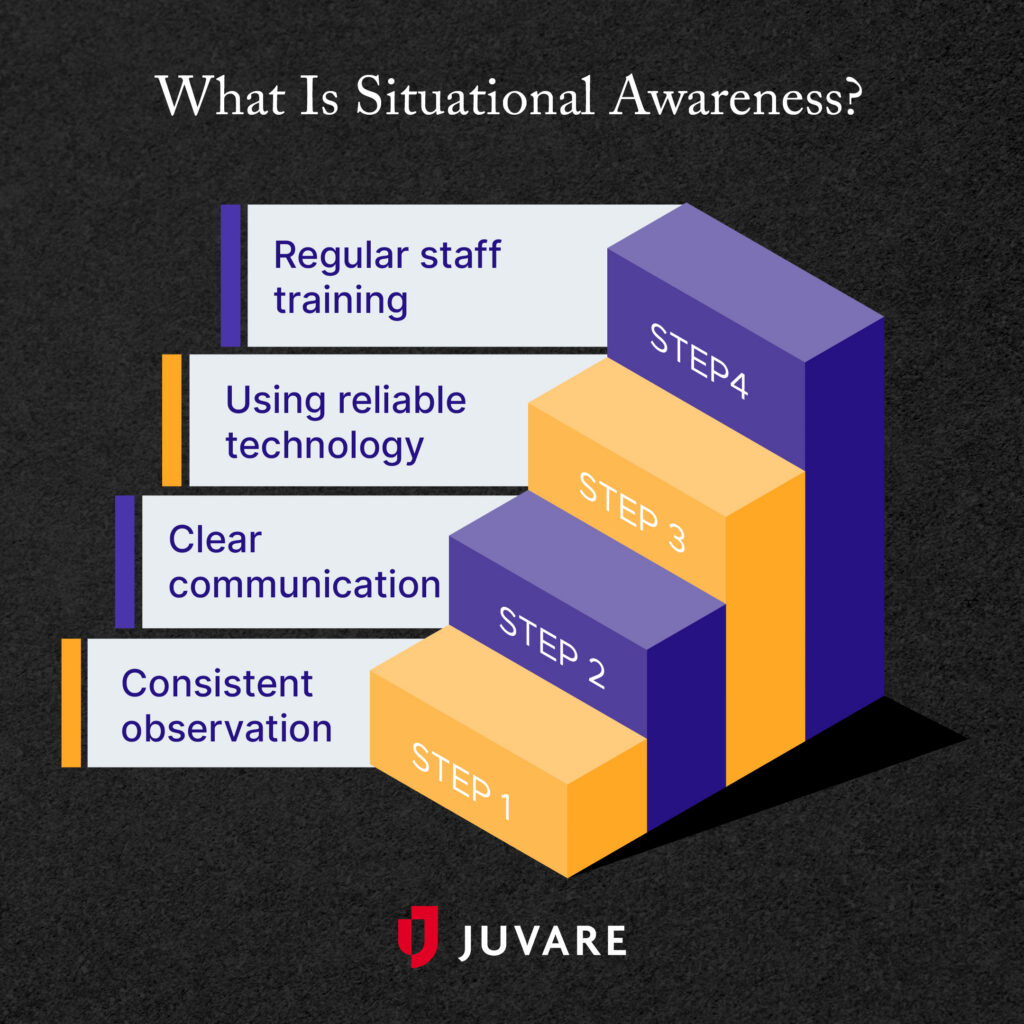
- Consistent observation of surroundings and emerging events
- Clear communication between departments and stakeholders to ensure access to critical information
- Using reliable technology to monitor operations and available resources
- Regular staff training to empower faster, more effective response when an emergency does occur
Who Benefits From Situational Awareness?
Across industries, situational awareness protects people, brands, and property from damage. Let’s explore the specific benefits for corporations, healthcare facilities, higher education, and federal defense:
Businesses and Corporations
For corporations, critical events can lead to enormous financial losses due to damage or disruption of business operations, supply chains, logistics, property, and brand reputation. For example, studies have shown:
- The average cost of downtime for large corporations is $9,000 per minute, with high-risk industries averaging $5 million in losses per hour of downtime.
- Companies affected by a data breach lose an average of $4.88 million.
Situational awareness can help you get back up and running faster, preventing further damage and minimizing losses.
Hospitals and Healthcare Facilities
In disaster situations, communities rely on hospitals and healthcare facilities to continue efficient operations, even as healthcare staffing and resources are stretched thin.
While dealing with crises, healthcare facilities must practice situational awareness through consistent and clear coordination with first responders, including fire, police, and EMS, while also complying with government agency standards, regulatory mandates, and accreditation requirements.
Higher Education Institutions
Colleges and universities are increasingly under scrutiny for how they handle crisis situations, which can affect funding, enrollment, and the school’s reputation.
Educational institutions must be able to coordinate effective disaster response in addition to handling operational security on a daily basis. Maintaining situational awareness allows them to protect the lives of students, faculty, and staff, as well as mitigate potential damage to school property and even the institution’s standing.
Federal Defense
Defense agencies must maintain real-time situational awareness across every sphere—land, air, sea, space, and cyber—to ensure the safety of their citizens. Defense agencies must practice active threat monitoring, predictive analysis, and cross-agency collaboration between military, civilian, and international partners.
The complexity of defense agencies’ responsibilities demands top-of-the-line communication capabilities and the highest level of data security. While legacy Government Off-The-Shelf (GOTS) systems worked well enough in their day, modern situational awareness for federal defence demands modern, battle-tested government management software.

How Technology Can Boost Situational Awareness
Effective critical incident management technology can make a substantial difference in how organizations prepare for, withstand, and recover from crises. These tools provide secure collaboration capabilities that enable your organization to quickly communicate key information, providing the situational awareness you need for an effective emergency response. The best critical incident management platform is one that gives your organization many capabilities, including: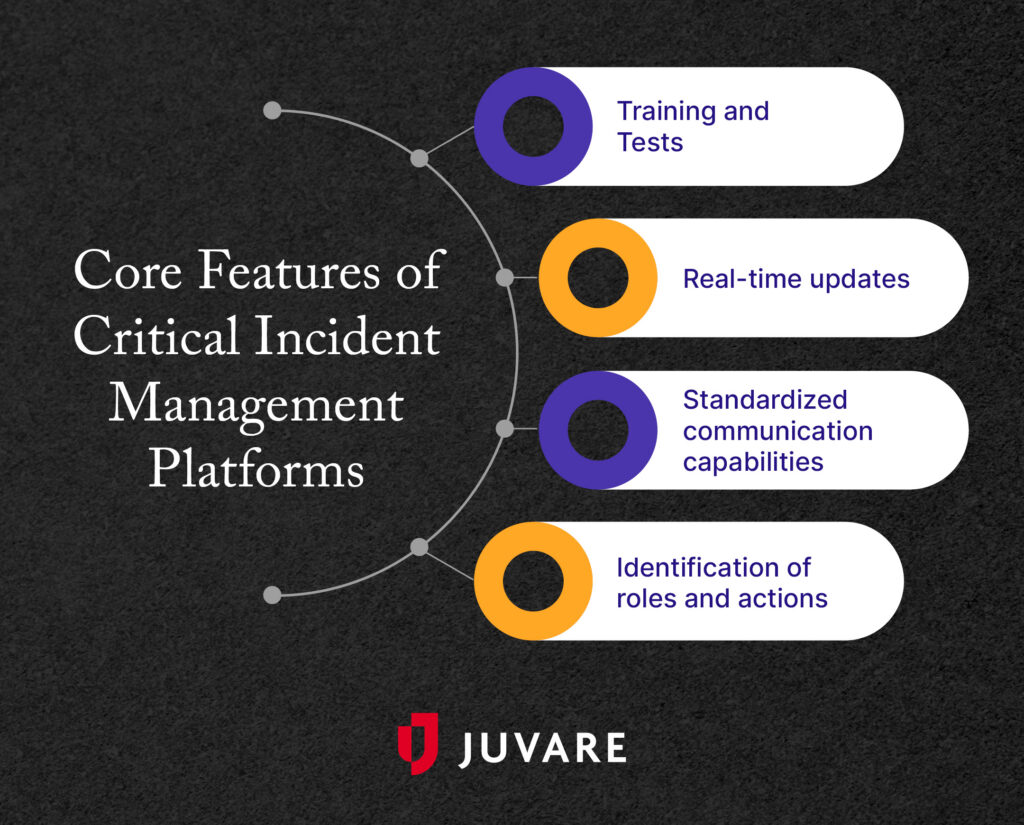
- A common operating picture across devices and locations, including organization-wide, community, and state-level events
- Real-time updates on operational status and resources available
- Standardized communication capabilities with employees, partners, or stakeholders during events or emergency situations
- Identification of roles and actions of critical incident teams
Juvare’s Situational Awareness Solutions
Juvare offers emergency response software solutions that greatly enhance your organization’s situational awareness and connectivity. Our top solutions include:- UCP, our secure command platform for federal and defense operations: Juvare’s United Command Platform (UCP) offers a real-time common operating picture across all domains, including land, air, sea, space, and cyber. With dedicated tracking and integrated spatial intelligence, you can streamline emergency workflows, including resource requests, incident tracking, and damage assessments.
- WebEOC, our continuity software: Private corporations, higher education institutions, healthcare facilities, and government agencies alike use WebEOC to enhance real-time situational awareness and decision-making. Quickly mobilize response efforts and coordinate across departments with WebEOC to respond and recover faster.
- HealthSuite, our healthcare and hospital emergency management software: Healthcare and public health organizations use HealthSuite to access real-time patient and resource tracking, multi-channel alerts, and volunteer management capabilities to fuel a more effective incident response.
- Juvare Exchange, our collaborative incident management solution: This WebEOC native add-on offers increased connectivity, allowing organizations to respond to critical incidents across public, private, and healthcare sectors and beyond geographical and jurisdictional barriers.

Additional Resources
To learn more about emergency preparedness and response, check out these resources:
- The Future Is Now: Emergency Management’s Technological Modernization: Discover how technology is transforming the emergency management industry by expediting key processes, increasing the capacity for complexity, and improving coordination.
- The Ultimate Guide to Creating an Emergency Response Plan: Having an emergency response plan in place allows your organization to react quickly and effectively. Learn how to create and implement a plan in this guide.
- Continuity of Operations (COOP) Planning: The Ultimate Guide: Continuity of Operations planning is essential for government agencies and many private enterprises. Learn how to create an effective COOP plan in this guide.