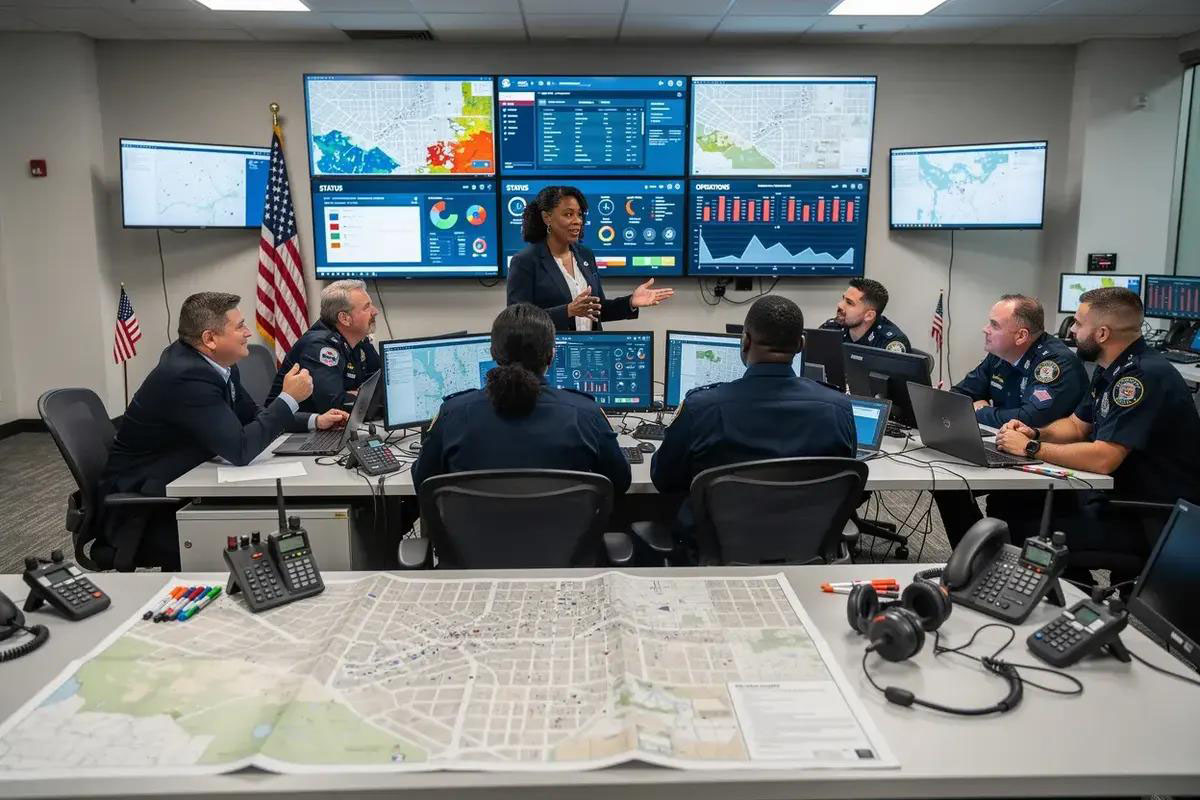

I recently had the opportunity to be onsite at a major regional utility’s Emergency Operations Center (EOC) to witness a critical step in their grid modernization journey. As I sat in the room during a high-stakes tactical drill, the atmosphere was focused and expectant. This was not just a remote exercise; every key player, from tactical commanders to logistics leads, was gathered in a single room to observe exactly how data would flow from the field to decision makers.

In the world of utility recovery, there is an old saying that paper takes all the ink you can handle. This was the reality during Hurricane Maria in 2017, where recovery was managed with pens, paper, and whiteboards. While the industry has since moved into a digital era, many utilities have fallen into a new trap: the good enough tool.
My time in the EOC made it clear, however, that a specialized platform like Juvare’s Crisis Track is no longer a luxury. It is an operational requirement for utilities that cannot afford to leave their recovery to chance.
The Financial Ghost of Hurricane Fiona
During the briefings that preceded the drill, the utility’s leadership team reflected on the immense financial hurdles that follow a major storm. They shared a sobering perspective from the aftermath of Hurricane Fiona (2022), where the lack of a structured, validated damage assessment process meant that critical field data was often lost or captured incorrectly while crews focused on restoration.
The result of those missing data points was a massive retroactive documentation challenge. Without a dedicated system to lock in assessments as they happened, the utility was forced to dedicate significant unbudgeted capital to redo those assessments just to satisfy regulatory and federal requirements. This experience served as the primary motivation for the recent drill. It highlighted the hidden risk of using a good enough tool: if your data is not audit ready the moment a crew leaves a pole, the utility effectively pays for the same work twice through expensive post-storm field rework.
Real World Scars: The Danger of Unattributed Data
The need for total individual accountability was not a concept born in a classroom; it was a lesson learned from the chaos of real-world events. In previous responses, the use of general-purpose tools often meant relying on shared accounts. This created a significant documentation risk because there was no clear audit trail to identify who performed a specific assessment months after the fact.
Further, these real-world events revealed the danger of data bleeding between incidents. Without strict incident filtering, historical damage data from a storm years prior could remain visible on active maps. FEMA and other auditors are notoriously strict about incident periods, and if a claim for a current event is cluttered with data from the past, the entire reimbursement package is at risk of being rejected. The utility realized that they needed to move away from anonymous, overlapping data layers and toward a system of total traceability where every data point is tied to a specific incident and a verified user.
The EOC Breakthrough: A Moment of Collective Relief
The centerpiece of the tactical drill was the implementation of a Planning and Intelligence (P&I) support team. The scenario involved a municipal police headquarters, a facility running on a failing generator where power restoration was a matter of public safety.
We were all in the EOC together, and the entire leadership team was watching the main screen as the field data began to arrive. In the old model, field entries were often unreliable or incomplete, leading to hours of follow up calls. In this drill, when the field assessor submitted the damage report, it appeared instantly for the Damage Assessment Lead in the room.
I watched as the Lead performed a real time validation, checking for photographic evidence and structural accuracy. The moment the Lead hit the validate button, and the entry was officially confirmed as audit ready, there was a significant and audible reaction of relief from everyone involved. Seeing the process work in a single, transparent loop proved that the burden of accountability had successfully shifted from a post-storm cleanup to a real-time operational standard.
Integrating Assessment with Material Requisition
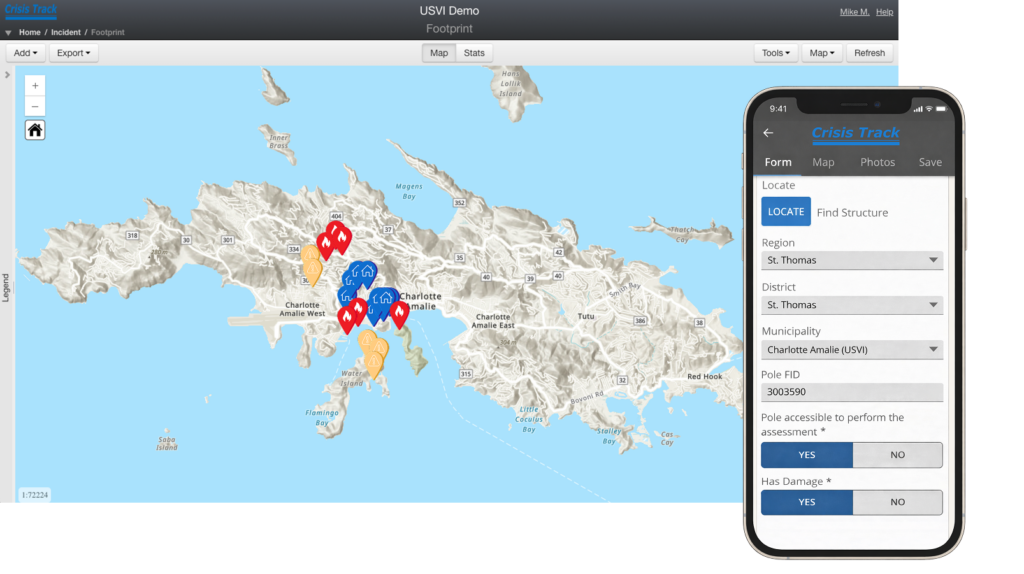
The vision for a modern utility is a seamless loop between field damage and inventory logistics. The organization is moving toward a future where a damage assessment in Crisis Track triggers a direct material requirement in their Asset Management system.
If an assessor identifies a broken pole on a distribution feeder, the system should identify the exact hardware and inventory components needed for that specific repair. By the time the restoration crew arrives at the warehouse, the materials are already pulled and waiting. This level of integration transforms a damage assessment from a statistical guess into an automated logistical work order that reduces restoration time.
Avoiding the Rush to Failure
This utility is being deliberate with this implementation. They have resisted the urge to deploy a half-finished process because they know that if an employee’s first experience with a tool is a failure, they will revert to outdated, manual methods.
By focusing on training and building a process that includes everyone from tactical commanders to the engineers designing work packages, the utility is proving that recovery is not just about fixing hardware. It is about a precise, validated, and integrated system that protects the financial health of the organization long after the lights come back on.