The FEMA Review Council released its final report in May, outlining ten recommendations to restructure federal disaster response and shift primary responsibility to state and local governments.
Although these recommendations are not actual policy changes, the central message for state and local emergency management is unmistakable: more is likely coming your way. The report calls for a renewed emphasis on “locally executed, state managed, and federally supported” disaster response, an emphasis that would land largely on the shoulders of the agencies and officials on the front lines.
Juvare has been working alongside those officials for decades. Here’s why this matters and how WebEOC Nexus and Crisis Track have agencies well positioned for this moment.
What the FEMA Review Council Report Actually Calls For
The Council’s ten recommendations span the full disaster lifecycle, but several themes are especially consequential for state and local emergency managers:
- States will carry more of the load. The report recommends replacing the current Public Assistance reimbursement model with a parametric block grant (RAPID Direct Funding) that goes directly to states within 30 days of a declaration. States administer the funds. That means more accountability, more data requirements, and less federal assistance.
- National capability standards are coming. The Council explicitly calls for encouraging adoption of national capability standards at the State, Local, Tribal, and Territorial (SLTT) level, incentivizing scalable training, and promoting common exercise standards. Jurisdictions that can demonstrate mature, standardized operational practices will be better positioned under any future federal framework.
- Resource coordination needs to improve systemically. The report calls for revitalizing a Unified Resource Catalog across federal and SLTT partners, so that state and local officials can quickly and efficiently leverage all available assets during a disaster. Fragmented coordination is incompatible with that vision.
- Software modernization is a need and an expectation. The Council recommends streamlining and modernizing agency technology, including expediting the closeout of legacy IT systems. States still running on outdated emergency management platforms will face compounding challenges as these reforms take hold.
- EMPG funding may see a one-time boost. To support the transition, the Council recommends exploring a potential one-time increase to the Emergency Management Performance Grant (EMPG). That funding could be a critical window for states to upgrade systems and capabilities before the new operational model fully takes effect.
The Operational Challenge for Emergency Managers
The FEMA Review Council report accelerates the shift to state-led disaster management, but significant questions remain about whether many jurisdictions have the staffing, technology, and operational infrastructure to absorb expanded responsibilities.
If this moves forward, it will mean greater pressure to demonstrate capability. Reporting, coordination, and resource tracking won’t be able to be handled through spreadsheets and phone trees. A state that manages the RAPID grant effectively will need to show with data what it did, when it did it, and how resources flowed. A jurisdiction that can’t produce that documentation may find it harder to justify future federal support. This is the kind of environment where the right emergency management software becomes a force multiplier.
How WebEOC Nexus and Crisis Track Are Built for FEMA Reform
WebEOC Nexus: Cross-Jurisdictional Interoperability at Scale
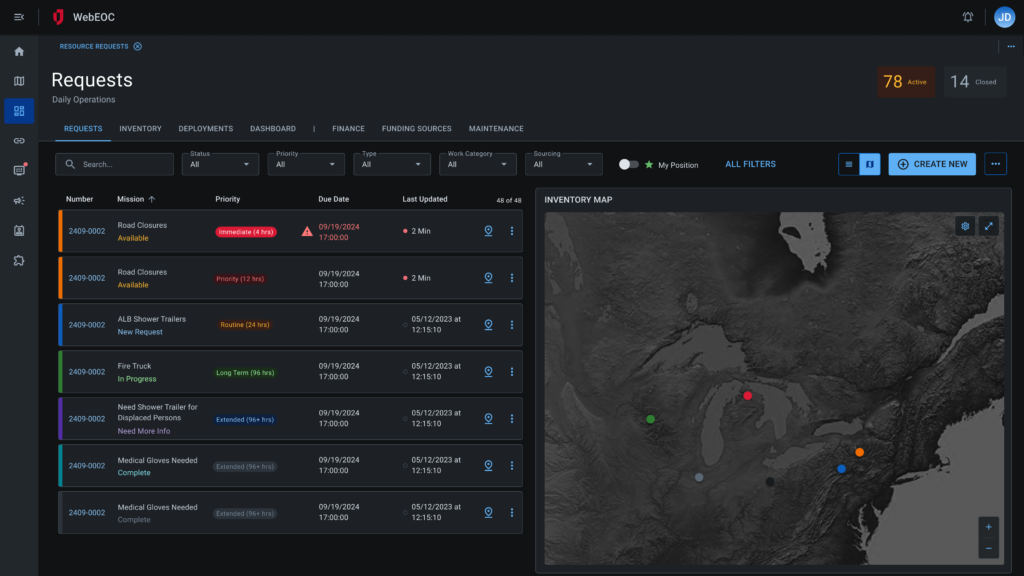
The FEMA Review Council calls for national capability standards and a unified approach to resource coordination, an outcome that WebEOC is architected for.
When a state needs to understand what’s happening across dozens of counties during a major event, WebEOC provides the connective tissue: standardized incident structures, shared situational awareness, and documented workflows that can be reported upward to satisfy federal accountability requirements. And with Juvare Exchange, it enables true cross-jurisdictional interoperability, allowing multiple agencies and levels of government to share a common operating picture in real time.
Beyond situational awareness, WebEOC supports the full operational lifecycle the new model demands. Users get mutual aid coordination through Requests, Inventory, and Deployments (RID); workforce visibility through NQS certification tracking; and structured exercise management with HSEEP documentation built in.
For states considering a platform upgrade or consolidation, there’s a compelling policy and financial argument: A single enterprise-wide WebEOC deployment could bring every jurisdiction in a state onto a common platform, reducing redundancy, improving reporting, and building the documented capability the Council’s framework expects. What’s more, the DHS has signaled it wants to support states making exactly this kind of investment.
Crisis Track: Emergency Resource Management Built for the Unified Resource Catalog
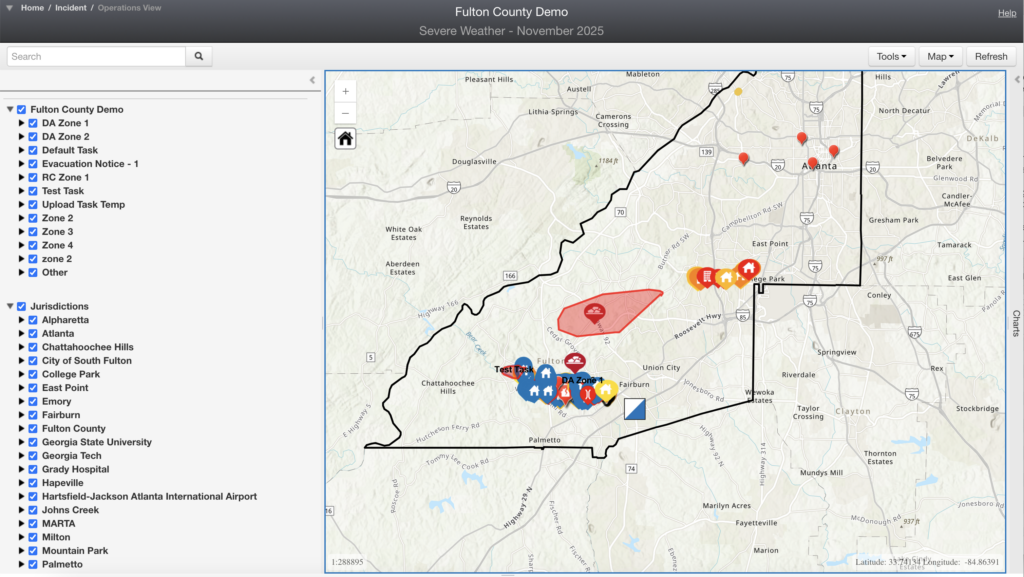
One of the Council’s clearest operational recommendations is revitalizing resource tracking and sharing across federal and SLTT partners. Crisis Track provides comprehensive emergency resource management, volunteer tracking, and mission deployment capabilities across jurisdictions.
When disaster strikes and states need to rapidly inventory, request, deploy, and track resources across people, facilities, and equipment, Crisis Track delivers the visibility and documentation the new accountability model requires. Field-level damage data helps answer where impacts are greatest, where gaps remain after resources are allocated, and how to prioritize what comes next. It integrates directly with WebEOC, ensuring resource status feeds into the broader operational picture (rather than living unintegrated in a silo).
For states managing their own RAPID grants and emergency sheltering responsibilities, knowing exactly what assets you have, where they are, and how they’re being deployed is what allows you to demonstrate accountability.
A Partner to Hundreds of Agencies Like Yours
Juvare’s solutions are already proven at scale across every level of government, serving more than 700 state, local, and federal clients across all 50 states, and connecting jurisdictions and critical infrastructure providers that have been using the platform for years.
This matters because the FEMA Review Council’s reforms are fundamentally about seamless interoperability between federal, state, and local levels. New vendors bring implementation risk, integration uncertainty, and a learning curve that a jurisdiction absorbing more responsibility can’t afford. Juvare brings a network already woven into the fabric of how emergency management gets done in this country and a track record of aligning with federal reporting standards before they become mandates.
Sources: FEMA Review Council Final Report, May 2026; DHS FEMA Review Council Presentation, May 2026; National Association of Counties FEMA Review Council Analysis; Emergency Management Performance Grant Program, FEMA.gov.
If your state is working through what these changes mean for your operations (or exploring how a potential EMPG increase could fund a platform upgrade), let’s have that conversation. We’ve walked this path with federal and state partners for decades and we’re ready to walk it with you.